How Bug Tracker Works From Report to Resolution
This page breaks down how bug tracker works at Zunoy, giving dev, QA, and product teams a context-rich workflow to report bugs, triage bugs, assign bugs, fix bugs, verify fixes, and close bugs, managing every stage of the bug lifecycle without losing ownership, evidence, or technical context.

Free to start
No credit card required
Visual Bug Reporting
Multi-channel tracking
Full context from day one.
manage
Manage Bugs Together in One Workflow
Create projects, invite your team, and manage every issue with status, priority, severity, assignee, and activity history. Understanding how bug tracker works starts here: Zunoy Bug Tracker keeps the full bug tracking process and bug management workflow connected from reporting to closure.

Team Roles
Bring developers, QA engineers, product managers, and support teams into one focused bug tracker system workflow.
Bug Creation and Metadata
Create bugs with title, description, status, assignees, priority, severity, tags, and steps to reproduce.
Clear Ownership
Assign bugs to the right person and keep responsibility visible from first triage to final closure.
Step 1
Bug Gets Reported
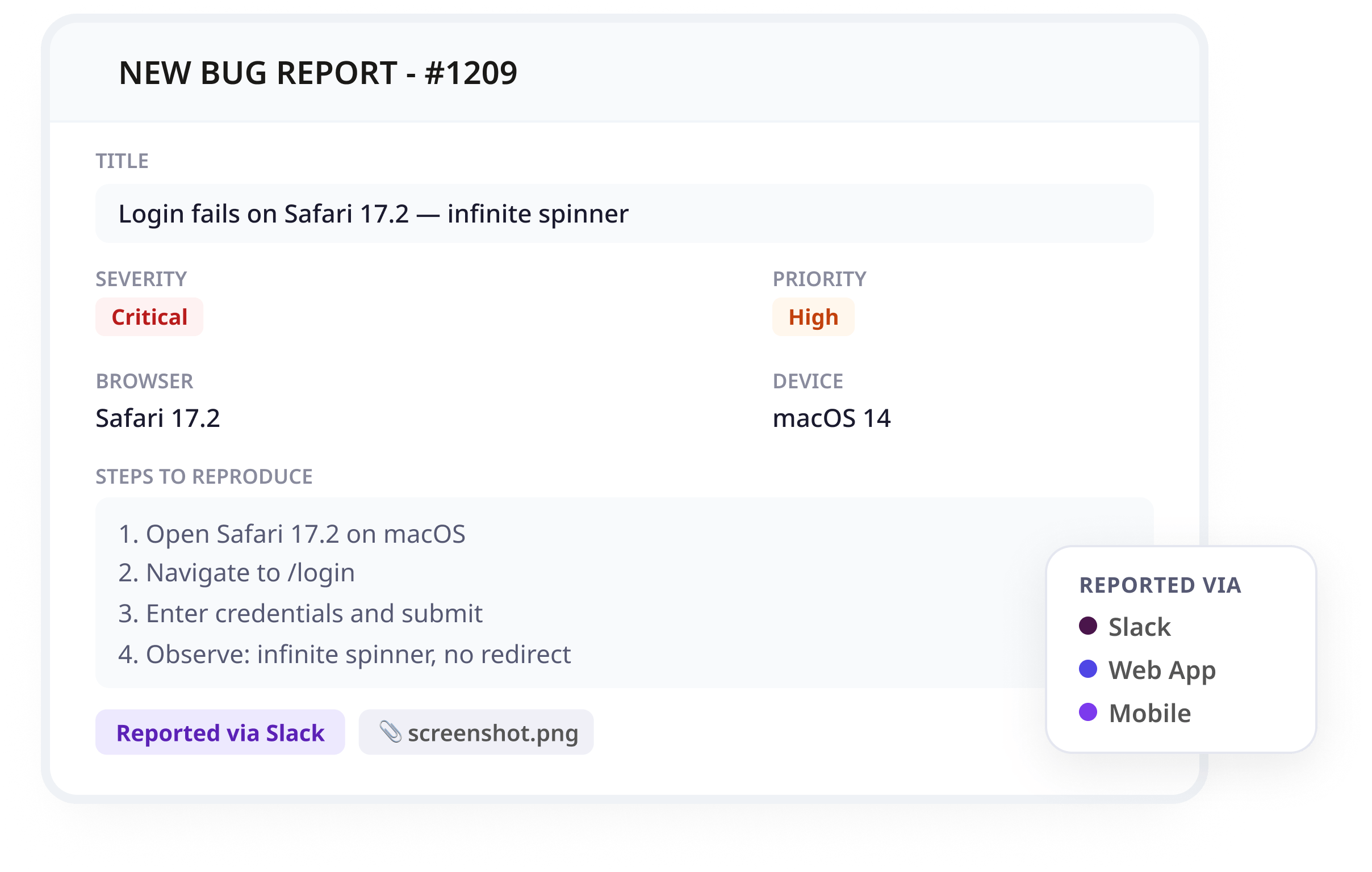
This is the first stage in how bug tracker works: the moment an issue is captured, whether during QA testing, customer calls, or team discussions. Zunoy Bug Tracker captures bugs from the channels where issues already happen, matching the natural software bug flow your team follows.
- 1
Multi-Channel Reporting
Report bugs from the web app, mobile app, widget, Chrome extension, email, Slack, Microsoft Teams, API, or webhooks.
- 2
Full Bug Context
Add title, description, severity, priority, screenshots, files, browser details, device data, and page context.
- 3
Steps to Reproduce
Capture reproduction details early so developers spend less time chasing missing information.
Step 2
Bug Gets Prioritized
Every new bug needs impact, urgency, and ownership. Zunoy Bug Tracker helps teams triage bugs, set priority, assign bugs, and organize issues before they turn into duplicate work, delayed fixes, or unclear handoffs, an essential part of the bug tracking process.
- 1
Severity and Priority
Mark how serious the bug is and how urgently it needs to be fixed.
- 2
Smart Assignment
Assign bugs to the right developer, QA engineer, or team based on project, component, release, or workflow.
- 3
Workflow Organization
Sort bugs by reporter, status, assignee, priority, severity, tags, and other key details.
- 4
Related Issues
Link similar bugs, duplicate bugs, or sub-bugs so teams avoid repeated work and keep context connected.
Step 3
Team Works on the Bug
Once a bug is assigned, the full conversation stays inside the issue. This collaboration stage is a core part of the bug lifecycle, keeping screenshots, notes, files, and decisions in one place instead of scattered across chats and documents.
- 1
Comments
Ask questions, share findings, explain fixes, and keep technical discussion attached to the bug.
- 2
Attachments
Add screenshots, logs, files, documents, and supporting evidence in one place.
- 3
Activity Timeline
Track comments, status changes, linked bugs, sub-bugs, and issue updates in the bug history.
Step 4
Stay Updated on Bug Activity
Bug tracking should not depend on manual follow-ups. Part of how bug tracker works day to day is timely visibility: Zunoy Bug Tracker sends updates as issues are reported, assigned, or resolved, so the right people stay informed without checking the dashboard.
- 1
Bug Report Updates
Receive updates when bugs are reported or important activity happens in the bug tracking workflow.
- 2
Status and Ownership Changes
Stay informed when a bug changes status, gets assigned, or moves closer to resolution.
- 3
Fewer Manual Check-ins
Keep teams aware of bug progress through updates instead of asking for status manually.
Step 5
Bug Gets Closed
A bug is not truly done until the fix is verified. Zunoy Bug Tracker helps QA retest the issue, reopen it when needed, or close it with final context. This is the stage that closes out the bug tracking process with a verified fix and a clear record of what changed and why.
- 1
Fix Verification
QA teams can retest the bug, confirm the expected result, and add verification notes.
- 2
Closure Notes
Keep fix details, screenshots, comments, and final decisions connected after the bug is closed.
- 3
Bug Tracking Knowledge Base
Turn resolved bugs into reusable records with root causes, fixes, related issues, and lessons learned.
Ready to Move Bugs Out of Spreadsheets?

200 Free AI Credits

No Credit Card required

Free Forever
Capture bugs from 8+ channels
Keep full context attached to every issue
Track the complete bug lifecycle
Give dev and QA teams one focused workflow
NOTIFICATIONS
Bug Updates Where Your Team Works
Keep every bug management workflow moving with clear updates for the people who need to act, review, approve, or verify.


Lifecycle Updates
Notify teams when a bug is created, assigned, moved to a new status, resolved, reopened, or closed.
Action Needed Updates
Send alerts when someone is mentioned, assigned, asked to review, or needed for the next step.
Project Activity Updates
Keep teams aware of important bug movement across projects, including new issues, ownership changes, priority updates, and blockers.
Scheduled Bug Reports
Send periodic summaries for open bugs, resolved issues, workload, project health, and delayed fixes.
FAQs
The things Developers actually ask.
How does a bug tracker work?
A bug tracker works by helping teams report, triage, assign, fix, verify, and close software bugs in one organized workflow. In short, that is how bug tracker works: every issue moves through the same structured path.
What is a bug tracking workflow?
A bug tracking workflow is the process teams use to manage software bugs from first report to final resolution with clear context, evidence, and ownership.
What happens during bug triage?
Teams review the bug, check severity, set priority, assign an owner, add tags or fields, and decide the next action.
How does Zunoy help teams report bugs?
Zunoy helps teams report bugs from the web app, mobile app, widget, Chrome extension, email, Slack, API, and webhooks with context like screenshots, severity, priority, device data, and steps to reproduce.
Can teams collaborate inside a bug?
Yes. Developers, QA engineers, and product teams can use comments, attachments, activity history, status updates, and ownership changes inside each bug.
How do teams stay updated on bug activity?
Zunoy supports bug tracker notifications for activity such as new reports, assignments, status updates, comments, resolutions, and closures.
Get started
Start Tracking Bugs With Full Context
Report bugs with full context, triage faster, collaborate clearly, verify every fix, and turn resolved issues into reusable team knowledge with Zunoy Bug Tracker. That's how bug tracker works with Zunoy Bug Tracker, from first report to reusable knowledge.
Setup in seconds
Capture full bug context
Assign clear ownership
Timesheet included
Free tier available