API Chain Monitoring for the Flows Your Users Actually Take
A single endpoint returning 200 doesn't prove your login flow, your checkout, or your onboarding actually works. API Chain Monitoring, or multi-step API monitoring, lets you chain HTTP requests together pass values from one step into the next, and assert that the whole sequence, not just one call, behaves the way it's supposed to.

Why It Matters
What a Single Endpoint Can't Prove

False Positive
Plenty of API failures still return a 200, with a broken, empty, or wrong response behind it.

Multi-Step Login
Authenticate, fetch a token, use it, a single ping check can't test any of that.

Silent Token Failure
The first call works fine, the second one, which depends on it, quietly fails.

Cart to Checkout
Three steps that depend on each other, only a full sequence proves they work together.
Getting Started
Build a Chain in Five Steps
Built-In Checks
It Tests the Sequence, Not Just One Call

Variable Extraction & Chaining
Pull a value out of one step's response, and use it to build the next step's request.

Per-Step Assertions
Check status code, headers, or response content on every individual step, not just the last one.

Four Authentication Types
No Auth, Basic Auth, Bearer Token, or API Key, set globally or overridden per step.

SSL Certificate Validation
Get alerted if a certificate in the chain is invalid or expiring within 14 days.

Automatic Redirect Handling
Follow HTTP 3xx redirects automatically, so a chain doesn't break on a routine redirect.

Live Test Before You Save
Run the whole chain and see step-by-step results before it ever goes live.
Connected Beyond the Chain Itself
An API chain monitor doesn't work in isolation. It feeds directly into the rest of the platform.
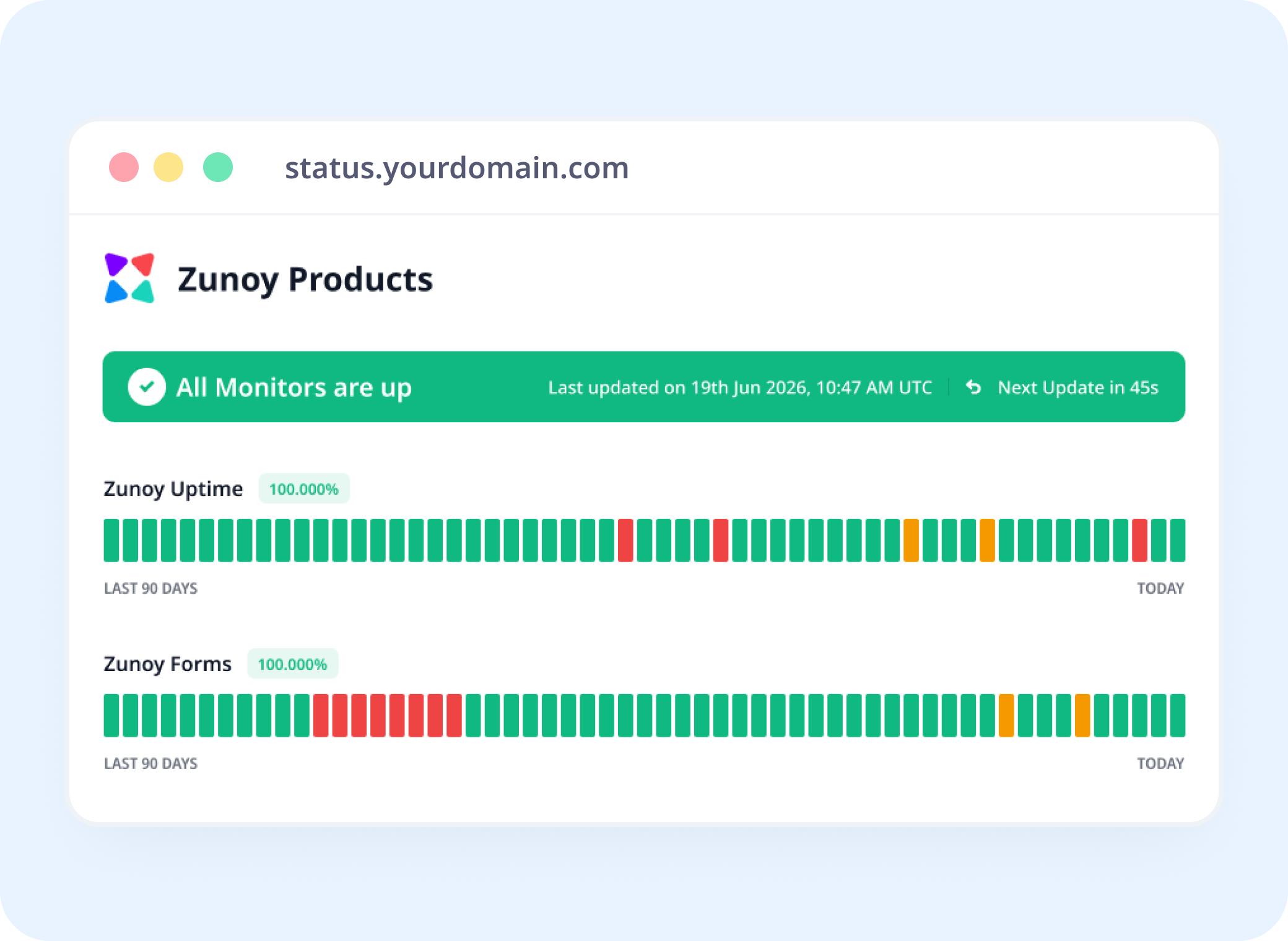
Status Pages
Show a Flow's Health, Not Just an Endpoint's
Link a chain monitor to a status page, so "Login Flow: Operational" is something visitors and your team can actually see.
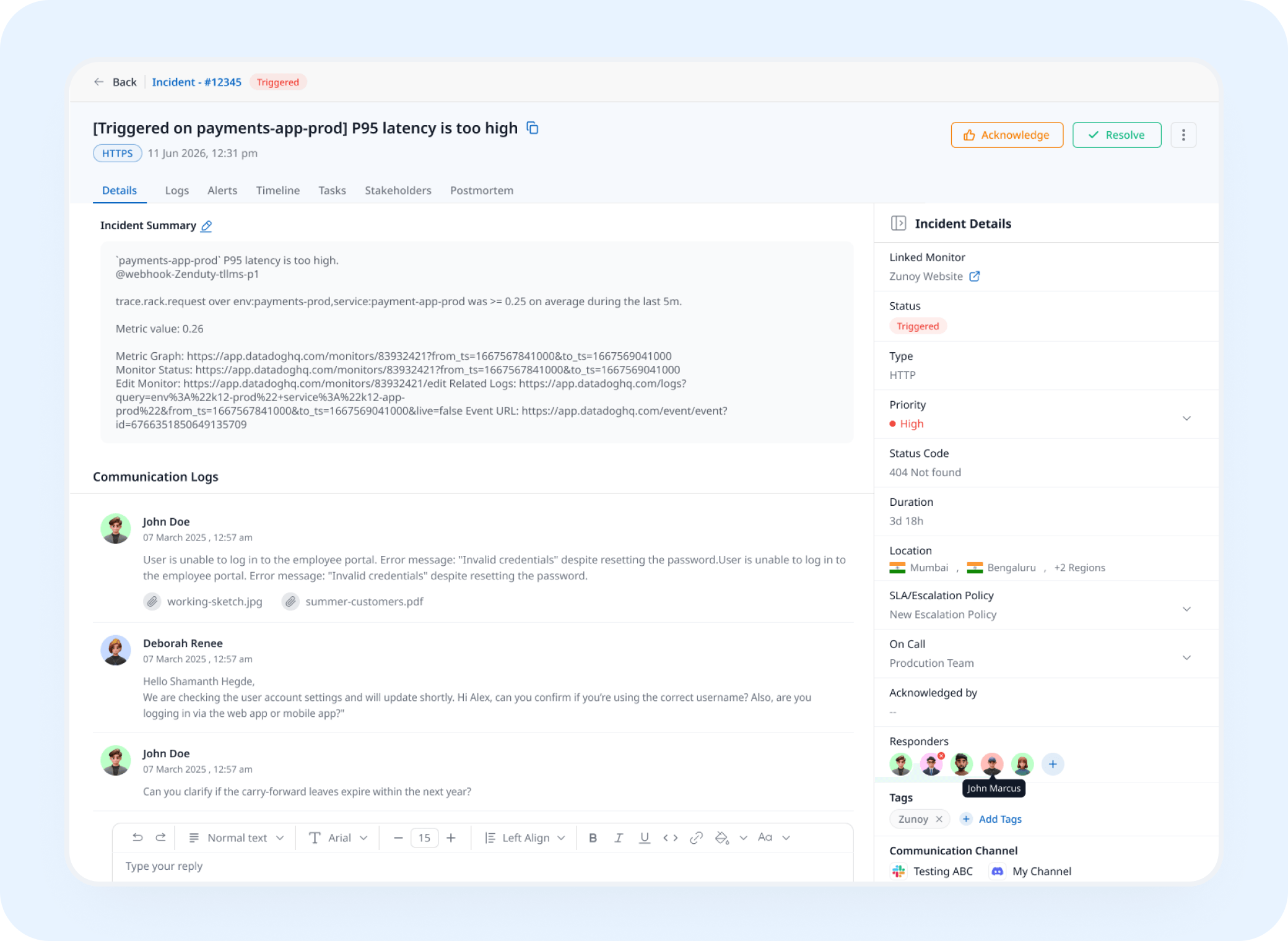
Incident Response
A Broken Step Opens a Real Incident
A failed assertion, at any step in the chain, triggers an incident automatically, tracked and assigned instead of discovered downstream.
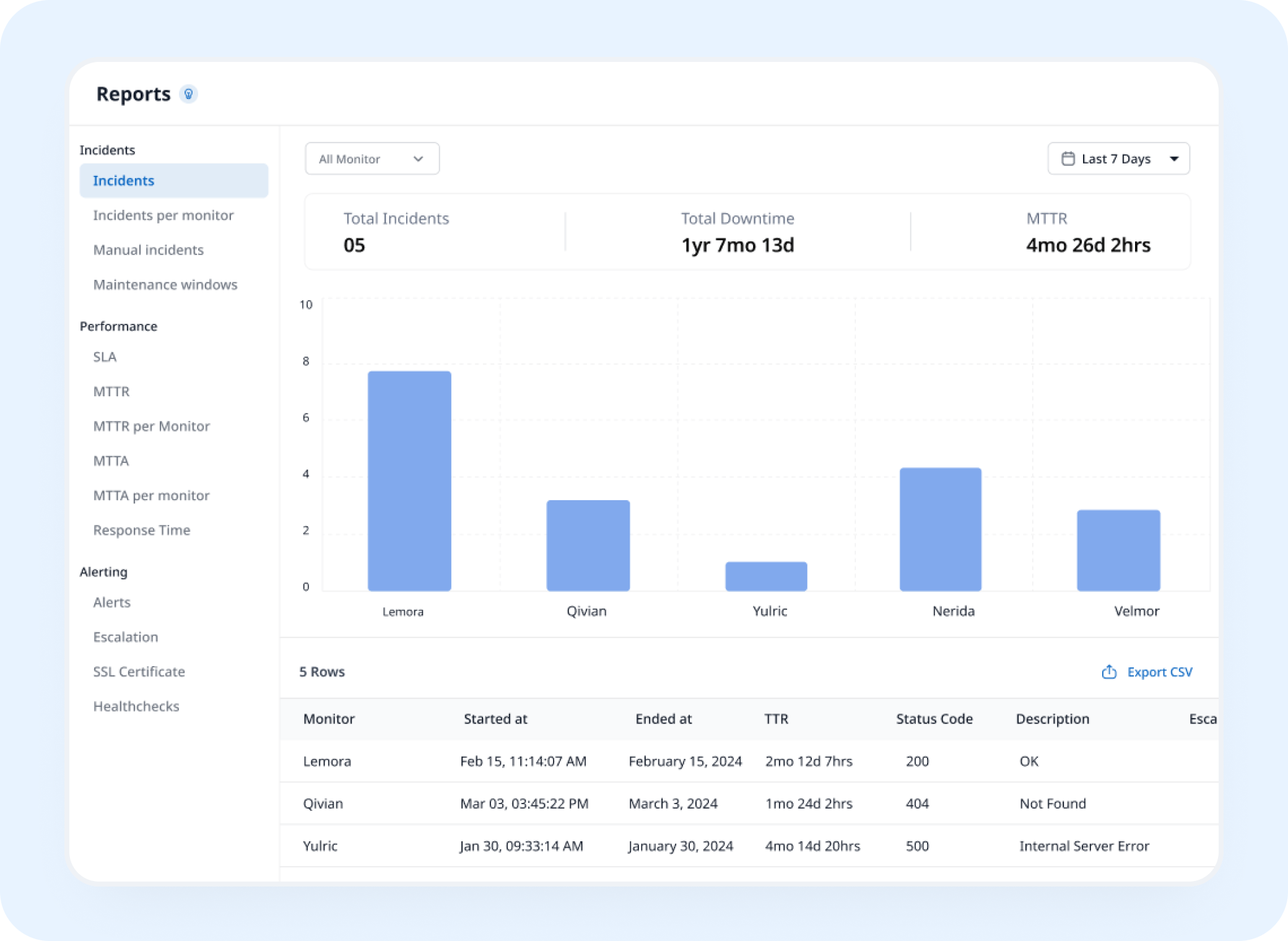
Analysis
See Which Step Actually Breaks Most Often
Historical results build into a record of exactly which step in the chain is the weak link.
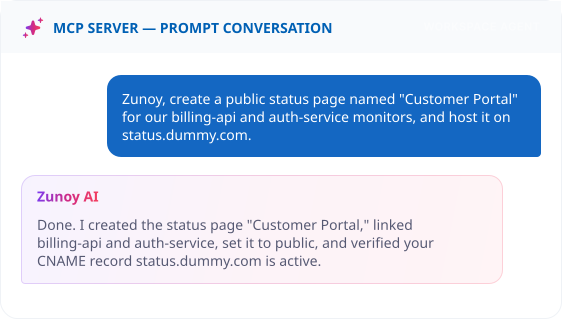
AI Features
Ask AI Agent Which Step Failed and Why
When a chain fails, ask what happened. AI Agent points to the exact step and the assertion that broke, instead of you reading through raw request logs.
Benefits
What Every Chain Actually Proves
One endpoint answering correctly says nothing about the flow it's part of. Here's what testing the full sequence actually confirms.

Proves the whole sequence works, not one call
A login flow succeeding end to end is a very different claim than one 200.
Catches the step that actually breaks
Per-step assertions point to exactly where a chain failed, not just that something did.
Tests with real data passed between steps
A token extracted in step one gets used in step two, the same way your app does it.
Confirms auth works across the whole chain
Not just that a login succeeds, but that everything depending on it does too.
Alternative
When a Step Depends on Someone Else
Some chains include a step you don't control, a payment gateway, a third-party auth provider, an external API your flow relies on. Track that provider as a Dependent Monitor, and know immediately whether a broken step is your code or theirs.
Track providers you depend on
See the real cause instantly
Reflected on your status page automatically


Stay Notified
Reaching the Team That Owns the Flow
A broken flow needs to reach whoever actually owns it. Route it to Email, Webhook, or Slack, whichever channel that team already watches.
Other Ways to Test Your API


Real Scenarios
Who Actually Needs Full-Flow Testing
- SAAS
SaaS Teams
A login → fetch profile → update settings flow, tested end to end, not assumed to work because one endpoint returns 200.
- ECOMMERCE
Ecommerce
With API transaction monitoring, a cart → checkout → payment confirmation chain is caught the moment step two starts silently failing.
- DEVOPS
DevOps
An internal auth token stops refreshing correctly, flagged before every service that depends on it breaks too.
- PLATFORMS
Platform Teams
API workflow monitoring for a multi-step onboarding API, watched as one sequence instead of individually hoped-for endpoints.
FAQ
Quick Answers About Multi-Step API Monitoring
What is API Chain Monitoring?
API Chain Monitoring is multi-step API monitoring: a way to chain multiple HTTP API calls together, passing values extracted from one step into the next and asserting each response, testing a full sequence instead of one isolated endpoint.
What can I assert on each step?
Status code, headers, or response content, set independently for every step in the chain.
Can I test my chain before saving it?
Yes. You can run the full chain on demand before saving it, and see each step's request, response, and assertion results. This lets you confirm variables are extracted correctly and fix broken steps before the monitor goes live.
How do I pass a value from one step to the next?
A variable extracted in step N is automatically available in step N+1 through {{VAR}}.
What authentication types are supported?
No Auth, Basic Auth, Bearer Token, and API Key, set as a default for the whole chain or overridden per step.
How many failed checks before I get alerted?
You can set the monitor to alert after 1, 2, 3 or 5 consecutive failed checks. A lower threshold catches outages faster, while a higher one prevents false alarms from a brief network hiccup or a single slow step.
Prove the Flow
A 200 Response Isn't Proof the Flow Works
Chain the calls that make up a real user flow, and know the moment any step in it actually breaks.
Tests the full sequence, not one call
Points to the exact step that failed
Catches what a single endpoint check would miss