API Monitoring for When "It Responded" Isn't Enough
A 200 response doesn't mean the data behind it is actually right. API monitoring checks one endpoint at a time, the response code, the payload, and the timing, so a technically successful call that returns garbage doesn't slip past you.
Not what you're looking for? For testing a sequence of chained API calls with variables passed between steps, see API Chain Monitoring instead.
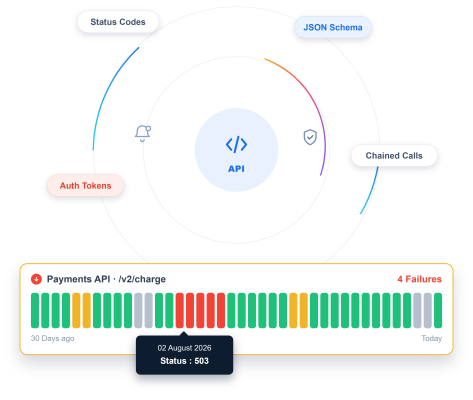
What to Check
Check the Endpoint Your Product Actually Depends On

REST Endpoint
A single API route your app calls directly, checked by the API checker the same way it’s actually used.

Internal Microservice
A service with no public face, but still something everything else depends on.

Third-Party API Dependency
Monitor API uptime for third-party providers and catch provider issues before they affect your service.

Webhook Receiver
Confirm the endpoint waiting for a callback is actually there to receive it.
Getting Started
Start Monitoring in Under a Minute
Name it and pick API
Name your monitor and select API as the type.
Enter your endpoint
Add the URL, method, and any headers or auth tokens the request needs.
Set your validation rules
Define what a successful response actually looks like, status code, response content, or both.
Turn on Incident Management
A failed or invalid response opens an incident automatically, ready to be assigned and tracked.
Built-In Checks
It Checks the Response, Not Just the Connection
API monitoring tools should verify how an endpoint actually behaves, not just whether it responds. Zunoy Uptime checks payloads, request configuration, authentication, and response-time performance in every monitor.

API Response Validation
Confirm the response content itself, not just that something came back.

Secure Credential Storage
Store auth tokens and API keys in Vault, referenced by the monitor instead of pasted into a config.

Custom Request Configuration
Set the exact method, headers, and auth your endpoint actually expects.

Response Time Thresholds
Flag an endpoint that's technically up but has slowed to a crawl.
Here's Everything It Connects To
An API monitor doesn't work in isolation. It feeds directly into the rest of the platform.
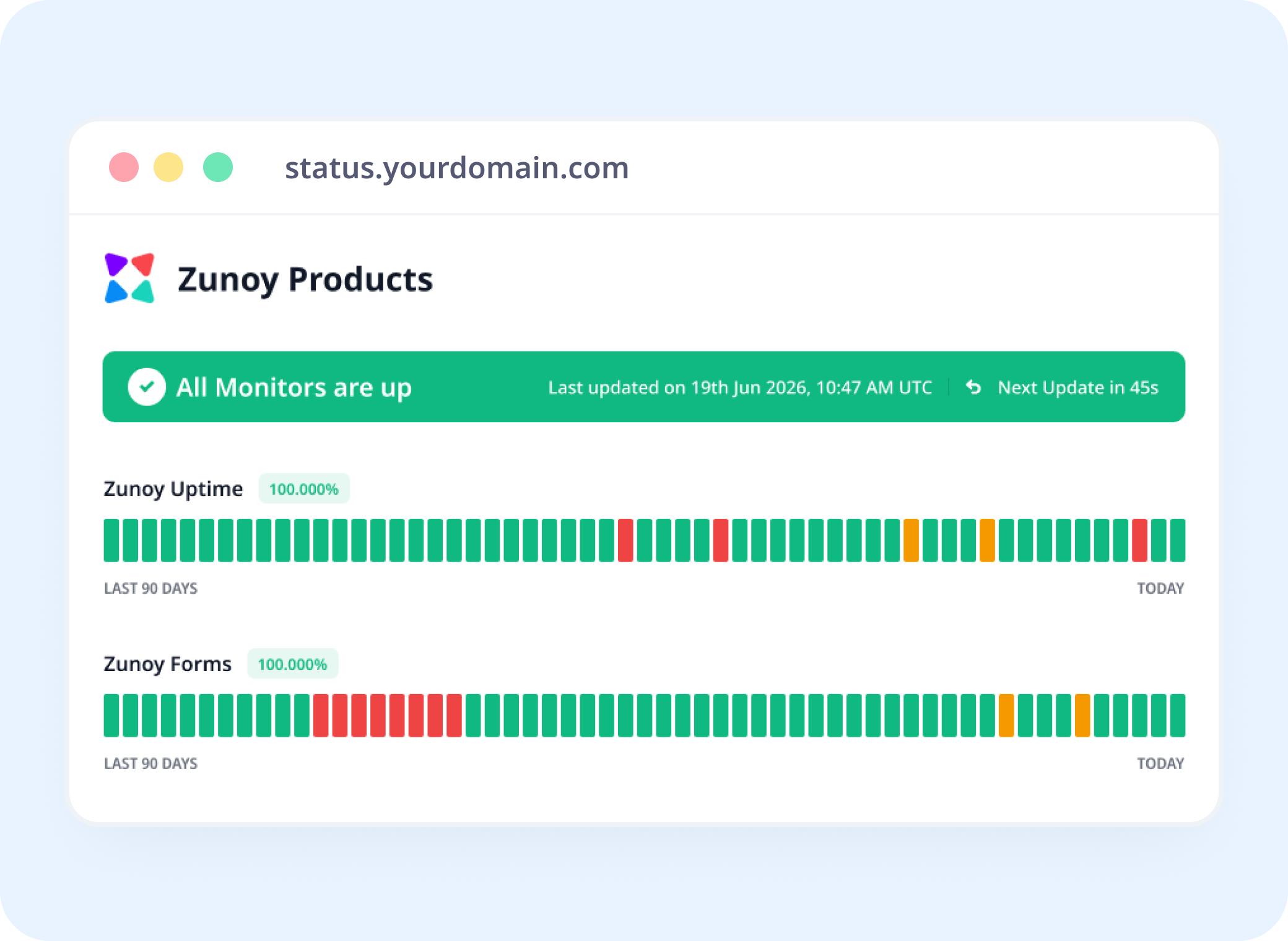
Status Pages
Show API Health Alongside Everything Else
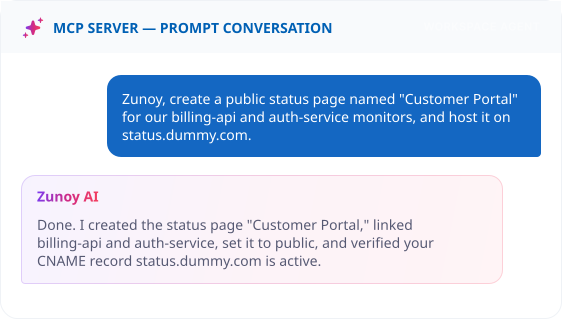
API health monitoring makes endpoint reliability visible on your status page alongside your website and other monitored services.
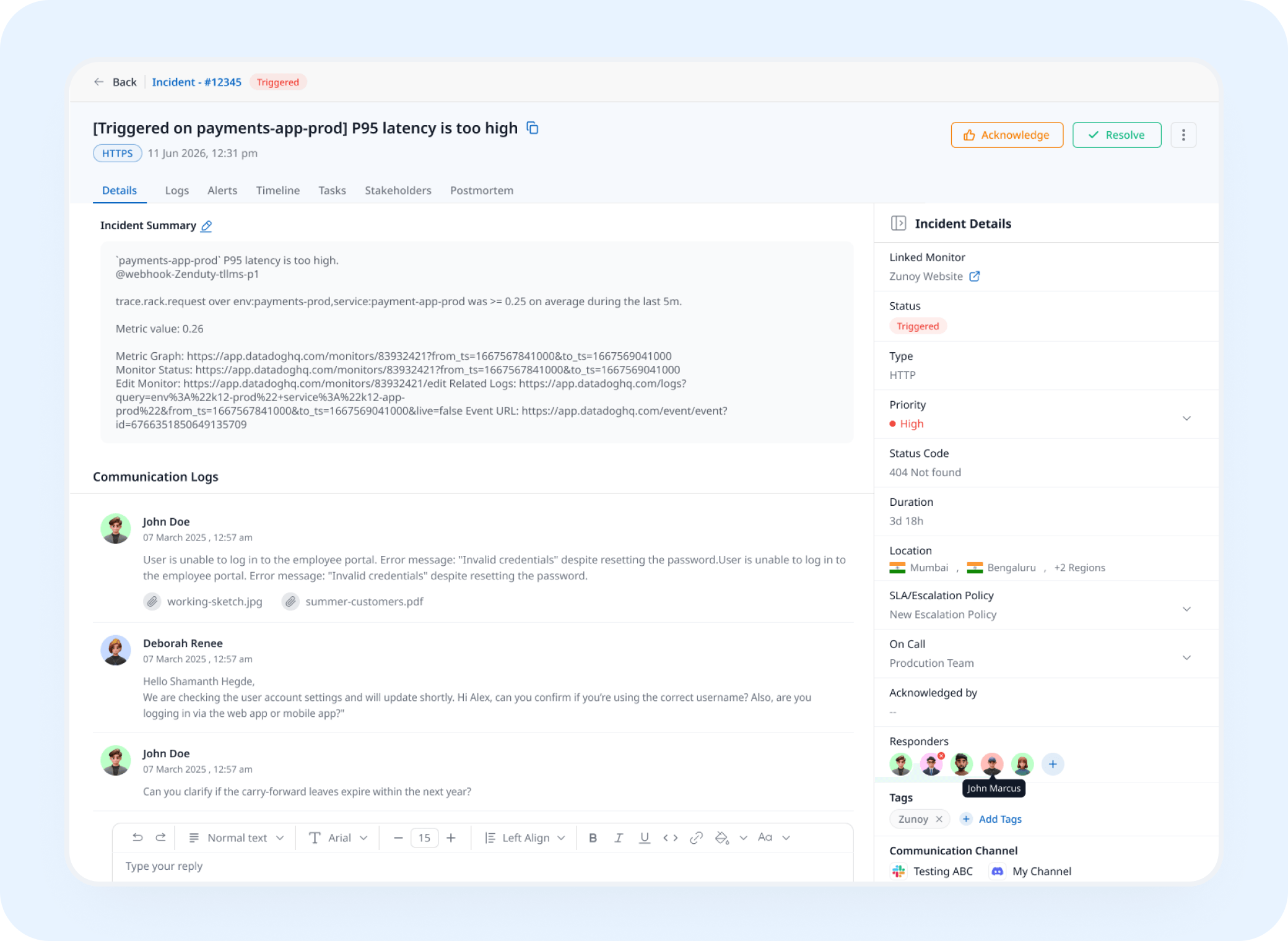
Incident Response
A Bad Response Opens a Real Incident
A failed validation triggers an incident automatically, tracked and assigned instead of discovered from a downstream bug report.
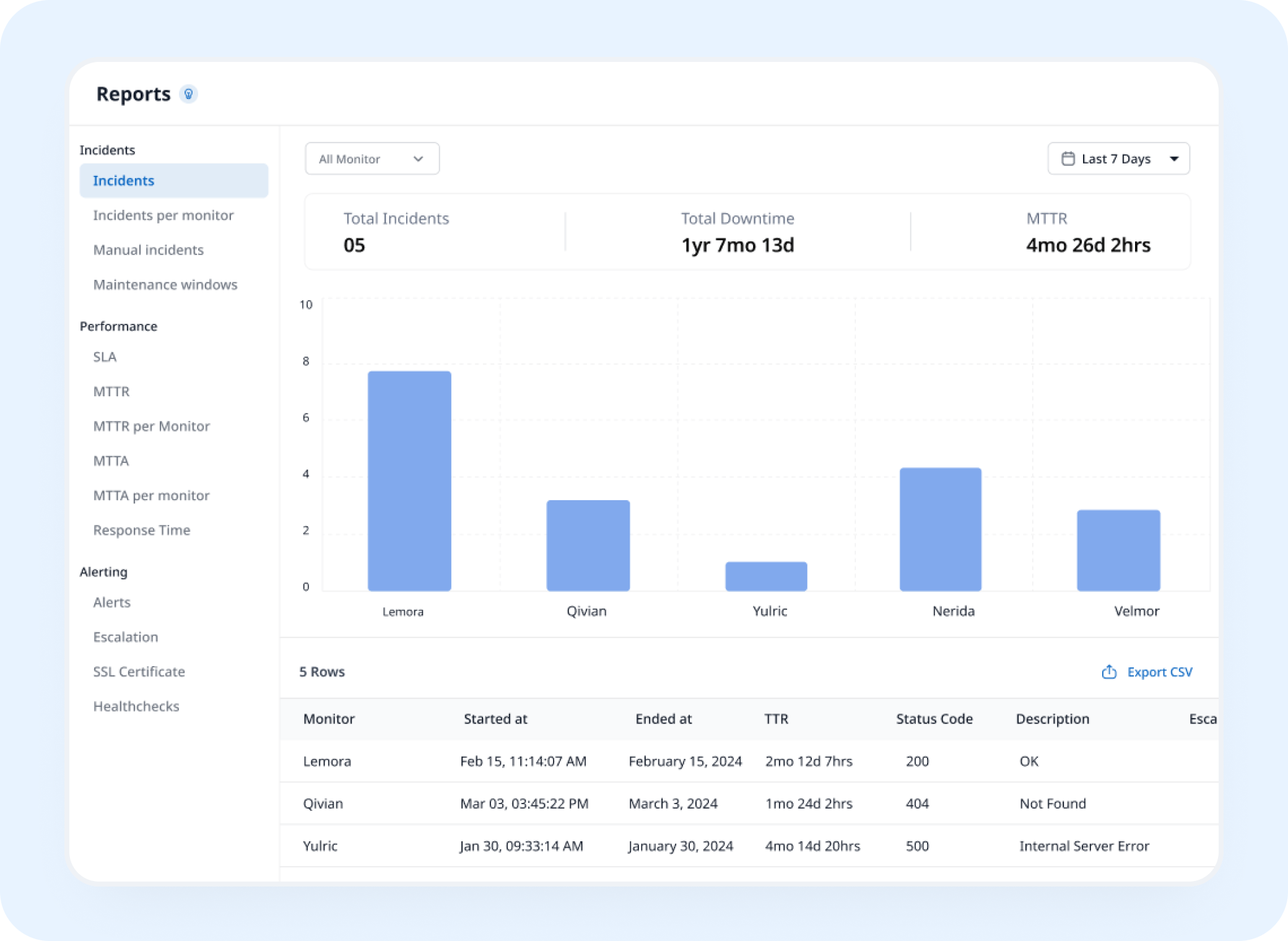
Analysis
See Response Time Drift, Not Just Today
Historical response data builds into a record of exactly how that endpoint has performed over time.
AI Features
Ask AI Agent What Actually Broke
When a check fails, ask what happened. AI Agent explains whether it was the status code, the payload, or the response time, instead of you digging through raw logs.
Benefits
What Every Check Actually Verifies
An endpoint answering isn't the same as an endpoint answering correctly. Here's what gets verified on every single check.

Validates the payload, not just the code
A 200 response with broken JSON still counts as a failure here. That's the gap a basic uptime check always misses.
Credentials stored once, reused everywhere
An API key lives in Vault, not pasted into every monitor's config. Update it once, and every check picks it up automatically.
Catches a slow API before it becomes a timeout
Response time thresholds flag a request crawling long before it actually fails outright and takes something down.
Works with the exact request your API expects
Custom headers, auth, and method, matched precisely instead of a generic GET request nobody actually sends.


Stay Notified
Get Alerts However Your Team Actually Works
A broken API rarely shows up on a website check. Route it to Slack, a webhook, or wherever the team that owns it actually looks.
You'll Probably Want One More Check


Real Scenarios
This Is What It Actually Catches
- SAAS
SaaS Teams
A billing endpoint starts returning 200 with an empty payload, caught before invoices go out wrong.
- DEVOPS
DevOps
An internal API's auth token expires, flagged before every dependent service starts silently failing.
- PLATFORM
Platform Teams
A third-party API you depend on slows to a crawl, caught before it drags your own response times down.
- MOBILE
Mobile App Teams
The backend API a mobile app relies on breaks, caught before app store reviews do.
- AGENCY
Agencies
A client's custom API integration, watched the same way as everything else in the stack.
Quick Answers About API Monitoring
What is API monitoring?
API monitoring is a check that sends requests to an API endpoint and verifies it's available, responds within an acceptable time, and returns the correct status code and payload. It catches backend failures, such as broken responses or malformed JSON, before they reach your apps and users.
How is API monitoring different from HTTPS monitoring?
HTTPS monitoring checks whether a URL is up and returns a successful status code. API monitoring goes further, letting you set the request method, headers, and body, and validate the response content itself. An endpoint can return 200 OK with an empty or incorrect payload, and only an API check will catch it.
Can I monitor an endpoint that requires authentication?
Yes. Store auth tokens and API keys securely in Vault, and reference them from the monitor.
How is this different from API Chain Monitoring?
API monitoring tests one endpoint per check. API chain monitoring runs a sequence of requests as a single workflow, passing values like auth tokens or IDs from one step to the next. Use API monitoring for individual endpoints and API chain monitoring for multi-step flows like login, create, and fetch.
Can I check the response content, not just the status code?
Yes. API response validation confirms the content itself matches what you expect.
What happens when a check fails validation?
When a response fails a status code, content, or response time assertion, Zunoy Uptime records a failed check. Once failures reach your sensitivity threshold of 1, 2, or 3 consecutive failures, the monitor is marked down, alerts go out, and an incident can open automatically if Incident Management is turned on.
Trust the Payload
A 200 Response Isn't Proof of Anything
Unlike a one-off online API checker, Zunoy checks what your endpoint is actually returning on a schedule, not just whether it answered at all.
Validates the response, not just the code
Credentials stored securely in Vault
Alerts before a slow API becomes a timeout