IPv6 Monitoring for Infrastructure With No IPv4 Fallback
A lot of infrastructure isn't dual-stack anymore, it's IPv6-only. IPv6 monitoring checks that reachability directly, on infrastructure where there's no IPv4 path to quietly fall back on if something's wrong.

What to Check
Where IPv6-Only Actually Shows Up

Cloud Subnet
Provisioned IPv6-only by default on most major cloud platforms now.

Compliance Endpoint
Required to support IPv6 under a federal or regulatory mandate.

Edge Node
Serving IPv6-first traffic directly, closer to where users actually are.

Cluster Service
Internal container networking that's increasingly IPv6-native by default.
Getting Started
Start Monitoring in Under a Minute
Name it and pick IPv6
Name your monitor and select IPv6 as the type.
Enter your address or domain
Add the full IPv6 address or domain, and set a check interval.
Set your sensitivity
Choose how quickly a failed check should actually count against you.
Turn on Incident Management
A failed check opens an incident automatically, ready to be assigned and tracked.
Built-In Checks
Built Around How IPv6 Actually Behaves
Exact Address Verification
IPv6 address monitoring verifies that the full address is reachable and configured correctly.

Response Time Tracking
See how that endpoint performs over IPv6, tracked on its own.

Monitor Sensitivity
Tune how quickly a failed check actually triggers an alert.

Failure Confirmation
Require multiple failed attempts before marking it down, since ISP-level IPv6 issues can be intermittent.
Connected to Everything Else
IPv6 monitoring connects directly with the rest of the platform, including status pages, incidents, reporting, and alerts.
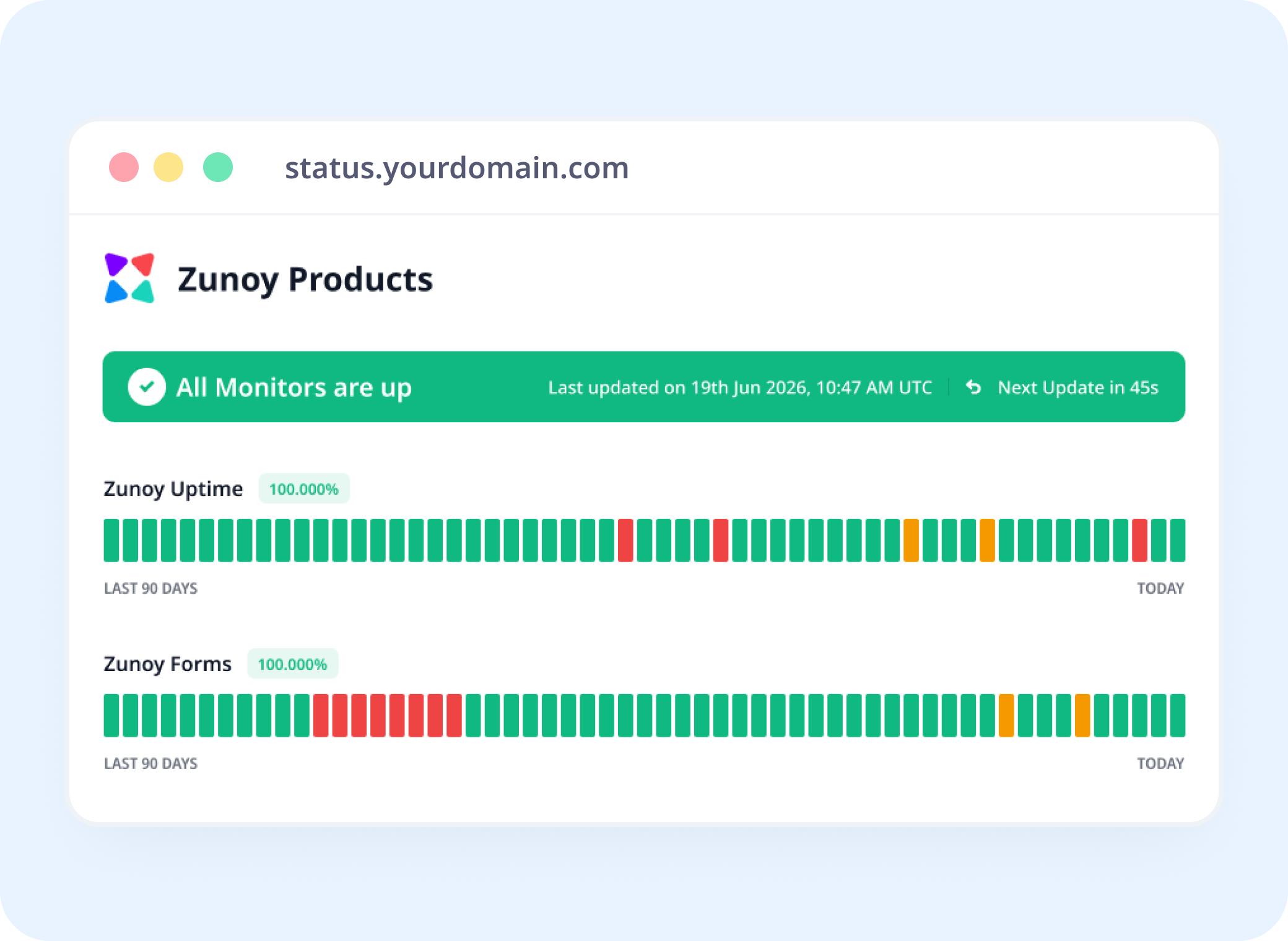
Status Pages
Show IPv6-Only Infrastructure Its Own Status
Link an IPv6 monitor to a status page, so IPv6 health monitoring gives infrastructure with no IPv4 fallback visible, honest status.
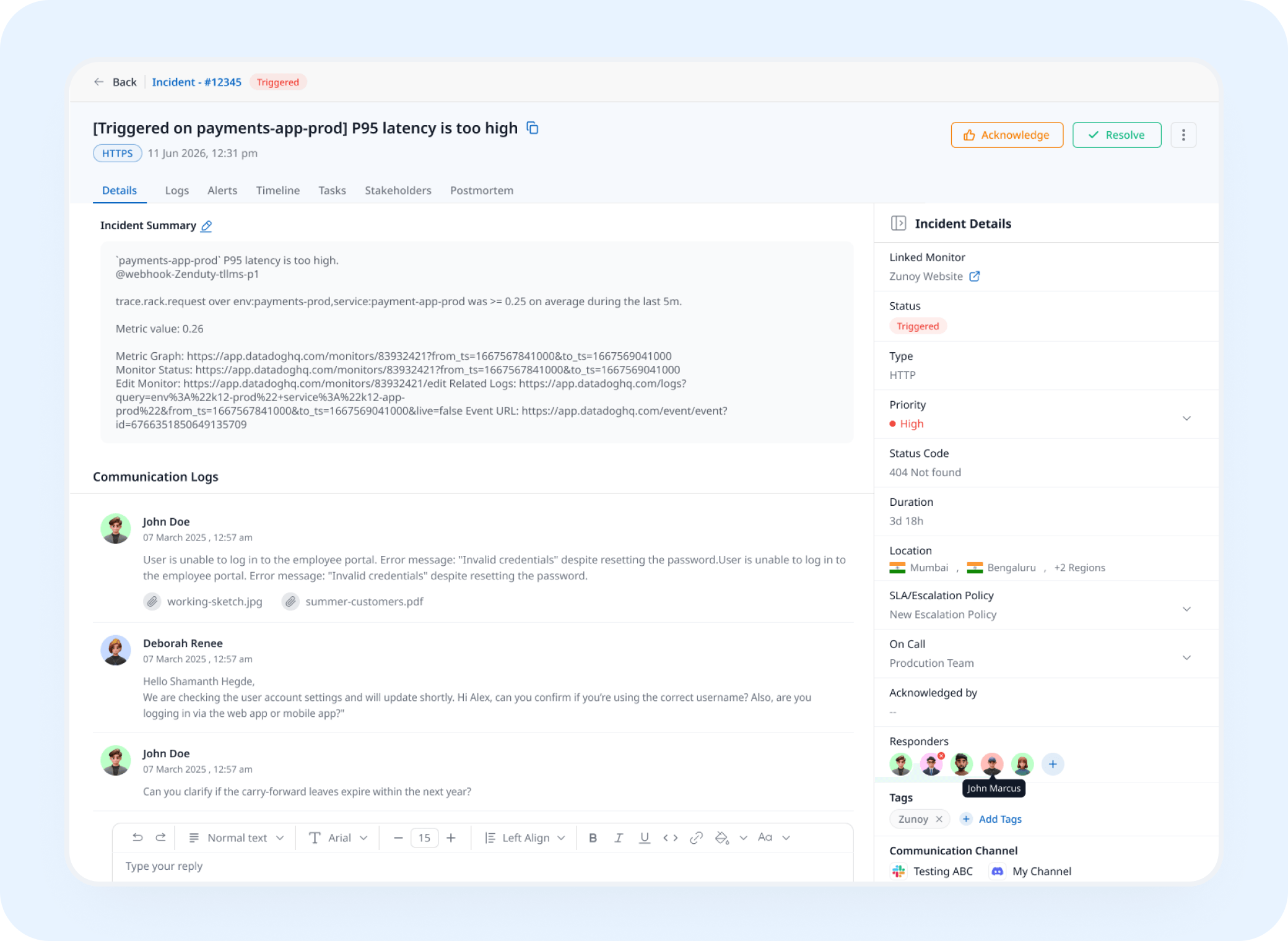
Incident Response
A Failed IPv6 Check Opens a Real Incident
A failed check triggers an incident automatically, tracked and assigned instead of discovered from a support ticket about "some users can't connect."
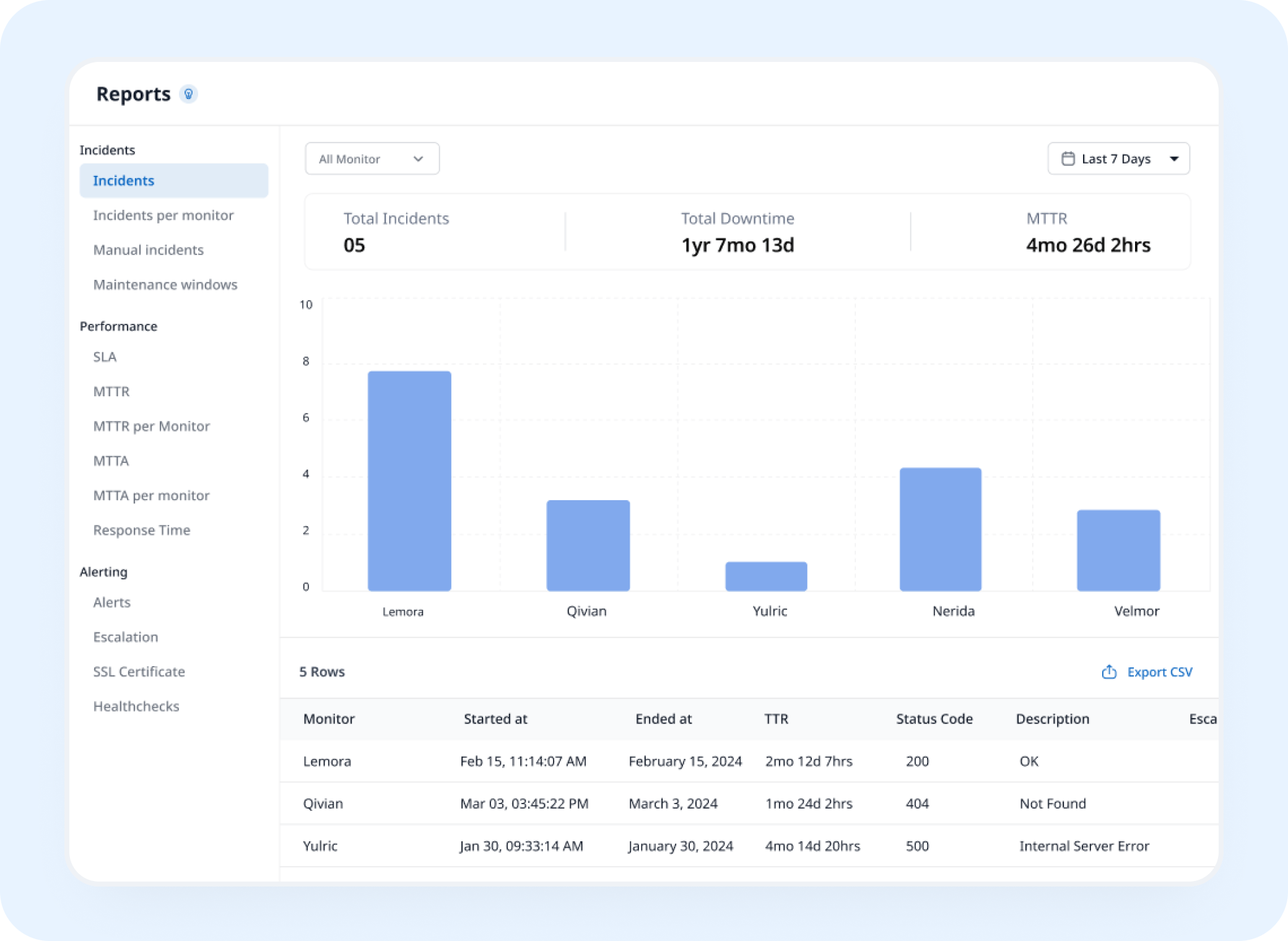
Analysis
Build a Compliance Record Over Time
IPv6 monitoring builds a history of reachability and response data, giving you evidence when a mandate or contract requires proof.
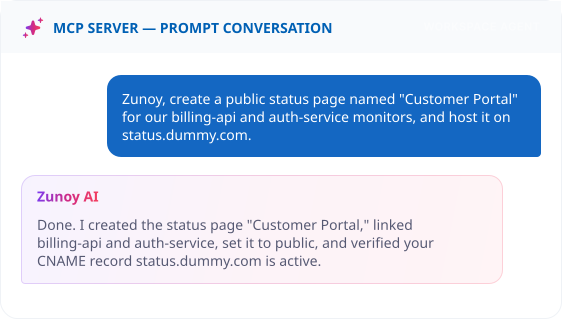
AI Features
AI SRE Flags an Address-Level Anomaly
If an IPv6 endpoint's response pattern shifts unexpectedly, AI SRE can flag it before it turns into an outright failure.
Benefits
Why IPv6 Is Harder to Monitor Reliably
IPv6 isn't just IPv4 with a longer address. Here's what makes watching it correctly its own problem.

Confirms reachability where there's no fallback
IPv6 availability monitoring matters because some infrastructure is IPv6-only now, with no IPv4 path behind it at all.
Separates a real outage from a network path gap
ISP-level IPv6 support is still uneven, so a failure here needs context, not a guess.
Verifies the exact address, not a rounded-off guess
IPv6 addresses are long and easy to mistype, a small error looks nothing like the intended target.
Proves compliance instead of assuming it
Some contracts and mandates require working IPv6, and this is the record that backs that claim up.
ALTERNATIVE
When It's Not Your Infrastructure at Fault
An upstream transit provider's own IPv6 routing can fail before it ever touches your servers, and on IPv6-only infrastructure, there's no IPv4 path masking it either. Track that provider as a Dependent Monitor, and let your status page explain the real cause.
Track providers you depend on
See the real cause instantly
Reflected on your status page automatically


Stay Notified
Getting the Alert to Whoever Owns the Stack
There's no IPv4 fallback to soften a failure here. Route it to Slack, a webhook, or wherever whoever owns your network stack actually looks.
More of the Stack Worth Watching


Real Scenarios
Who Actually Reaches for This
- GOVERNMENT
Government Contractors
An IPv6 compliance mandate needs proof, not a verbal assurance that it's working.
- CLOUD
Cloud-Native Teams
An IPv6-only subnet has no IPv4 fallback if something silently breaks.
- PLATFORM
Platform Engineers
Internal cluster networking goes IPv6-native, and nobody's actually verified it end to end.
- INFRA
ISPs & Infrastructure Teams
Use IPv6 endpoint monitoring to confirm IPv6-only services are reachable, without assuming an IPv4 check would've caught the same failure.
FAQ
Quick Answers About IPv6 Monitoring
What is IPv6 monitoring?
IPv6 monitoring checks reachability over a full IPv6 address directly, useful especially where there's no IPv4 path to fall back on if something breaks.
Why is IPv6 harder to monitor correctly than IPv4?
Many monitoring tools run from probes without native IPv6 connectivity, so they silently test over IPv4 instead. IPv6 also relies on separate AAAA records, firewall rules, and ICMPv6 handling, which are often configured less carefully than their IPv4 equivalents. Zunoy Uptime [runs IPv6 checks from monitoring nodes with native IPv6 connectivity], so the check genuinely tests the IPv6 path.
What happens when a check fails?
When your service doesn't respond over IPv6 within the timeout, Zunoy Uptime records a failed check. Once failures reach your sensitivity threshold, the monitor is marked down, alerts go to your configured channels, and an incident can open automatically if Incident Management is turned on.
Do I need this if my infrastructure is still dual-stack?
Yes, dual-stack is where IPv6 monitoring matters most. Browsers and operating systems quietly fall back to IPv4 when IPv6 fails, so a broken IPv6 path can go unnoticed for weeks while some users, particularly on mobile networks that prefer IPv6, experience slow loads or connection errors.
How is this different from IPv4 monitoring?
IPv6 monitoring tests the path your AAAA records point to, while IPv4 monitoring tests the path your A records point to. Because each protocol has its own addresses, routing, and firewall rules, a misconfiguration on one rarely shows up on the other, which is why each needs its own monitor.
Does one failed check mark it as down?
Not necessarily. Failure Confirmation lets you require multiple failed attempts before it's flagged, since ISP-level IPv6 issues can be intermittent.
No Fallback
IPv6-Only Means No Safety Net
If IPv4 isn't there to catch a failure, IPv6 needs its own honest check. Watch it directly, and know the moment reachability actually breaks.
Built for infrastructure with no IPv4 fallback
Verifies the exact address, not a rounded guess
Builds a record that can prove compliance